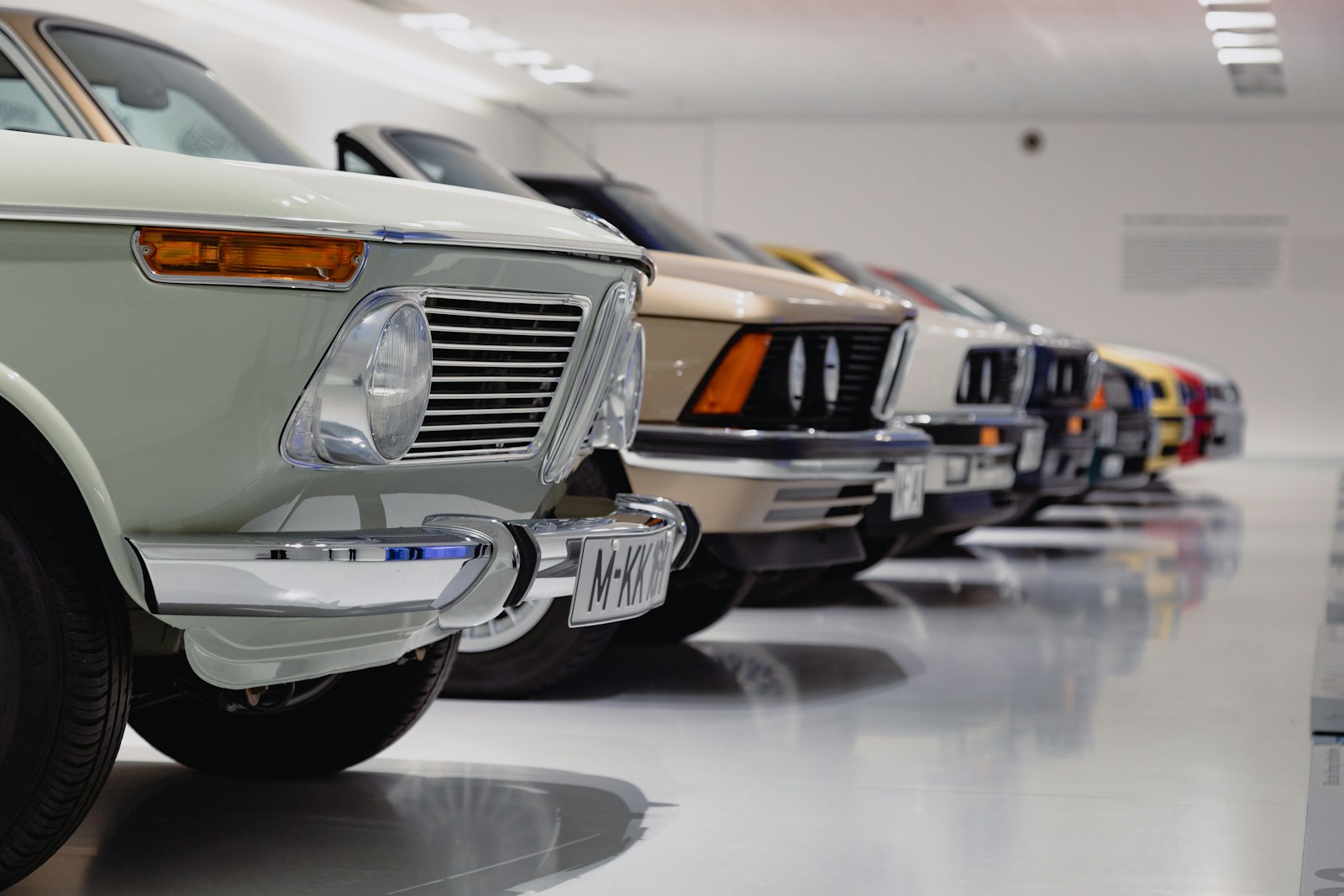
The car world is always changing, with new tech, what people want, and big company plans steering the way. As we move through 2024 and into 2025, many familiar car models are saying their final goodbyes, marking a big moment for car makers and drivers alike. This isn’t just a few cars disappearing; it’s a major industry shift, largely due to the fast move to electric power and the ongoing struggle to keep cars affordable.
Automakers are tirelessly refining their product lineups, a crucial component for any successful automotive franchise. These changes offer us vital insights into current consumer preferences and how brands anticipate future shifts in demand. While some models are simply being phased out due to low sales, others are casualties of a larger transition, making way for new vehicles or entirely different brand directions. It’s a compelling narrative of adaptation and evolution, where even popular segments like SUVs aren’t immune to change.
In this detailed look, we’ll explore 14 important vehicles leaving the U.S. market, digging into why they’re going and what their exits mean for the car industry. From fancy sports cars to practical family vehicles and even the most budget-friendly options, each departure tells us something about where the industry is headed. Come with us as we highlight these departing stars and understand the reasons behind their final curtain calls.

1. **Alfa Romeo Giulia Quadrifoglio and Stelvio Quadrifoglio**Alfa Romeo is a brand synonymous with passion and performance, and its Quadrifoglio variants, the Giulia sedan and Stelvio crossover, have long epitomized this spirit. However, even these celebrated performance models are facing discontinuation in the U.S. market after 2024. This move marks a significant shift for the Italian automaker, as confirmed by a statement from Alfa Romeo itself.
This change comes as Alfa Romeo focuses on its shift to electric vehicles. Larry Dominique, senior vice president and head of Alfa Romeo North America, mentioned on LinkedIn that the brand is saying farewell to North America “for now,” but was quick to add that “this is not the end of the story.” This hints at a possible comeback for their performance models, but most likely in an electric form, fitting perfectly with the industry’s current direction.
Interestingly, the context also points to a practical business reason: “Alfa Romeo inventory is the highest in the U.S. auto market as sales slow to a crawl.” This indicates a drop in demand for these specific performance variants, prompting parent company Stellantis to axe them. It highlights that even desirable, enthusiast-oriented models are not immune to market forces, especially when a brand is undergoing a major technological transformation.
For those who loved the Quadrifoglio’s thrilling gas-powered performance, this discontinuation is a bittersweet moment. It highlights the tough choices automakers face in balancing their history with future plans, especially as they move into a new era of transportation. While the Quadrifoglio name might reappear, its current gasoline version is officially signing off.

2. **Audi A5 Coupe and Convertible**Audi is known for its sophisticated design and refined driving experience, and the A5 coupe and convertible have long been stalwarts of its luxury lineup. However, after the 2024 model year, these elegant two-door versions will no longer be available. While the A5 will continue to exist as a Sportback in 2025, the dedicated coupe and convertible options are being phased out.
This strategic realignment is part of Audi’s ambitious plan to restructure its entire lineup. The German automaker intends to introduce 20 “new or improved” models before the end of 2026, with a significant portion—half, in fact—slated to be electric vehicles. This proactive approach highlights a broader trend among luxury brands to streamline their offerings and prioritize models that align with future electric and redefined internal combustion strategies.
The discontinuation of the A5 coupe and convertible reflects a growing preference for more versatile body styles, such as the Sportback, which offers the sleek lines of a coupe with the added practicality of rear doors and a hatchback. It also paves the way for Audi to simplify its manufacturing processes and allocate resources more efficiently as it embarks on a major product offensive, particularly in the EV space.
While lovers of traditional Audi coupes and convertibles might lament their departure, this move is a clear indication of Audi’s commitment to evolving its portfolio. It’s about making calculated decisions to optimize its offerings and prepare for a future where electrified and more dynamically segmented lineups will dominate the market. The A5 nameplate lives on, but its two-door iterations are part of a past era.

3. **Chevrolet Camaro**The Chevrolet Camaro, an enduring icon of American muscle and performance, is another significant nameplate saying goodbye. Chevrolet announced in March 2023 its plans to retire the sixth-generation Camaro, with the final vehicles rolling off the assembly line in January 2024. This marks a temporary end for a car that has captivated generations of enthusiasts.
Scott Bell, vice president of Global Chevrolet, addressed fans’ concerns in a 2023 statement, assuring them that “While we are not announcing an immediate successor today, rest assured, this is not the end of Camaro’s story.” This provides a glimmer of hope that the Camaro nameplate could return, potentially in an electrified form, aligning with General Motors’ broader push into electric vehicles. The context mentions, “Will the Camaro come back as an EV? It’s possible, but not confirmed.”
The discontinuation of the current Camaro generation reflects shifting market dynamics, where traditional sports coupes have seen declining sales as consumer preferences gravitate towards SUVs and crossovers. Automakers, including Chevrolet, are reallocating resources to develop vehicles that align with these trends and future mobility, particularly electric drivetrains.
For now, the roar of the gasoline-powered Camaro’s V8 engine will fade from new car showrooms. Its departure, even if temporary, symbolizes a transition point for performance vehicles, where heritage-rich brands must adapt to new powertrains and market realities. The legacy of the Camaro is undeniable, and its potential return as an EV hints at an exciting, albeit different, future for this muscle car legend.

4. **Fisker Ocean**The Fisker Ocean, an electric SUV that promised much, is unfortunately making a premature exit from the market. Its discontinuation is tied directly to the automaker’s recent bankruptcy filing in June. This swift downfall is a cautionary tale in the competitive and capital-intensive electric vehicle sector, highlighting the immense challenges faced by new entrants.
Magna International, the company contracted to build the Fisker Ocean, has stated that it “continues ‘to assume no further production’ after the automaker filed for bankruptcy.” This comment, made by Patrick McCann, Fisker’s chief financial officer, during an August earnings call, underscores the finality of the Ocean’s production halt. McCann further confirmed the situation in November, saying, “Fisker is behind us.”
The context notes that “It’s a shame since the Ocean is a remarkable vehicle, at least until you turn it on and face a hectic suite of software issues.” This points to a critical flaw that likely contributed to its demise, despite its promising design and electric powertrain. In today’s automotive market, software functionality and user experience are as crucial as hardware performance, especially for tech-forward EVs.
The Fisker Ocean’s journey is a sharp reminder that just having new ideas isn’t enough to succeed. Strong financial backing, efficient manufacturing, and flawless software and user interfaces are all incredibly important. Its rapid rise and fall show the high risks involved in the electric vehicle race, and for customers who believed in the Fisker dream, it’s a tough conclusion to what seemed like a promising beginning.

5.The Ford Edge SUV, a common sight on American roads, is another model ending its production run. Ford actually stopped making the Edge at its Oakville Assembly plant in Ontario, Canada, earlier this year. The reason behind this decision is quite straightforward: Ford is “retooling for new vehicles,” specifically to ramp up production of its incredibly popular and profitable F-Series Super Duty truck.
This strategic decision by Ford underscores the importance of optimizing production facilities to meet demand for its most successful vehicles. Jim Farley, president and CEO of Ford, stated on the company’s website that the automaker “has struggled to meet demand for the Super Duty.” This move, therefore, “benefits our customers and supercharges our Ford Pro commercial business.” It’s a pragmatic business decision prioritizing profitability and demand.
The phasing out of the Edge for the U.S. market aligns with Ford’s larger plan to electrify its lineup and reallocate resources. While the Edge has been a staple in the SUV segment, its departure makes room for future electric vehicles and the expansion of key segments like full-size trucks, which continue to be massive revenue drivers for the company.
While an Edge successor isn’t planned for the U.S. market at this time—the “new” Ford Edge is currently only sold in China—its discontinuation is a reflection of Ford’s commitment to evolving its product mix. It highlights how even strong sellers in popular segments can be sacrificed in the pursuit of greater operational efficiency and a future-focused portfolio, especially one leaning heavily into electric and commercial vehicles.

6. **Infiniti Q50**The Infiniti Q50 sedan, a luxury offering from Nissan’s premium division, is also set to depart the U.S. and Canadian markets after the 2024 model year. This move is part of a broader “transitioning our product portfolio and moving into our electrified era,” as stated by Infiniti spokesperson Ashli Bobo. It signifies a clear shift in strategy for the brand.
Bobo further elaborated that Infiniti is “making the decision to focus resources toward models in our core luxury segments, continuing on our promise to deliver four new models in the coming years.” This suggests that while the Q50 is leaving, Infiniti is not retreating from the luxury market but rather re-centering its efforts on a refreshed and potentially electrified lineup that better reflects current consumer trends and future technologies.
The discontinuation of the Q50, nearly a decade after its arrival, mirrors the fate of many sedans in today’s market. With a significant shift in consumer preference towards SUVs and crossovers, luxury brands are adapting their offerings to align with what customers are actively buying. This rationalization allows Infiniti to concentrate its research and development on high-demand segments and electric vehicle technology.
For loyal Q50 owners and luxury sedan aficionados, this marks the end of an era. However, it also points to Infiniti’s commitment to innovation and its determination to remain competitive in a rapidly changing industry. The brand is clearly setting the stage for a new generation of luxury vehicles, with an emphasis on electrification and a refined product strategy for the years ahead.

7. **Jaguar XE, XF, F-Type, I-Pace, and E-Pace**Jaguar is undertaking one of the most dramatic brand transformations in the automotive industry, which will see a significant portion of its current lineup discontinued after the 2024 model year. This extensive list includes the XE and XF sedans, the F-Type sports car, and both the I-Pace electric SUV and E-Pace compact SUV. The F-Pace SUV is the only survivor, set to “live on.”
This sweeping change is driven by Jaguar’s ambitious plan to “relaunch its brand in 2026,” with a dramatic shift toward an all-electric lineup. As the context explains, “stricter emissions regulations push out traditional combustion-engine cars in favor of electrified alternatives,” and “Jaguar is making a dramatic shift toward an all-electric lineup, leading to the discontinuation of several gasoline-powered models.”
The departure of iconic models like the F-Type, which has been a staple of Jaguar’s lineup for over a decade and is described as “its iconic sports car,” marks a profound moment for the brand. Even the I-Pace, an early entrant into the luxury electric SUV market, is being phased out, indicating that Jaguar’s future EV strategy involves an entirely new generation of vehicles.
For enthusiasts, this mass discontinuation is a significant event, signaling the end of an era for Jaguar’s traditional gasoline-powered and even its first-generation electric offerings. It’s a bold, high-stakes gamble to redefine the brand entirely, repositioning it as an exclusively electric luxury player. While current models like the F-Pace will continue with “sufficient inventory,” the vision for Jaguar’s future is decidedly different, leaving behind a rich legacy to embrace a fully electrified destiny.
The automotive industry’s relentless transformation continues to reshape its landscape, unveiling an exciting yet challenging future beyond 2024. Vehicles exiting in 2025 and beyond often signify deeper shifts in market demand, the accelerating push towards electrification, and corporate realignments, rather than just low sales. This next wave of discontinuations provides a clearer picture of evolving manufacturer priorities and consumer expectations. From luxury sedans making way for electric successors to budget-friendly options succumbing to rising costs, each departure tells a compelling story of adaptation. Automakers are making bold moves, shedding traditional nameplates to invest heavily in electric vehicle technology and reconfigure product portfolios for modern preferences. Let’s delve into seven more significant models making their final bows, offering insights into the broader trends shaping the industry.

8. **Maserati Ghibli**The Maserati Ghibli, a mid-size luxury sedan celebrated for its distinctive Italian styling and sporty performance, has concluded its production run. Officially, the company stated that production of the Ghibli sports sedan ended in late 2023, marking its discontinuation for the 2025 model year. This departure signifies a strategic realignment for the luxury Italian brand.
Maserati is currently making its entire lineup leaner, a critical move as it aggressively embraces electrification. The Ghibli’s departure allows the brand to channel its resources and concentrate its efforts on newer models, like the Grecale SUV, and upcoming fully electric vehicles such as the eagerly awaited GranTurismo. This strategy perfectly illustrates how even well-established luxury brands are adapting to the industry’s electric future.
The Ghibli nameplate itself boasts a rich heritage, first unveiled at the Turin Motor Show in 1966. Its name, derived from a ‘powerful, warm wind in North Africa that carries with it a great deal of sand,’ evoked exotic performance. While the current iteration of the Ghibli sedan is now behind us, its discontinuation underscores the brand’s commitment to forging a new, electrified path forward, even if it means saying farewell to beloved internal combustion models.

9. **Mini Clubman**The quirky and beloved Mini Clubman, known for its distinctive split rear doors and compact wagon styling, has officially ceased production. British auto brand Mini ended manufacturing of the second-generation Clubman in February, closing a chapter that began when the model was introduced in 2015 as a 2016 model year. This marks the end of its run without a direct third-generation replacement in sight.
Mini’s decision to retire the Clubman is intrinsically linked to its ambitious plans for an electrified future and a general ‘upsizing’ of its product portfolio. The space left by the Clubman will be filled by the ‘fully electric MINI Aceman crossover model,’ demonstrating Mini’s commitment to expanding its electric offerings and adapting to consumer preferences for crossovers.
While the electric Aceman is set to take its place, market availability for this new model in the U.S. and Canada has been deferred ‘until a later date,’ as confirmed by spokesperson Andrew Cutler. The Clubman’s exit also coincides with the arrival of the largest Mini ever, the Countryman, signaling a broader evolution in Mini’s design philosophy and market positioning.

10. **Mitsubishi Mirage**In an era of escalating vehicle prices, the Mitsubishi Mirage stands out as a significant casualty of the market’s affordability challenge. Mitsubishi previously announced plans to halt production of the compact hatchback for the U.S. market late this year. This marks the discontinuation of what was widely recognized as one of the cheapest new cars available in America.
With the average price paid for a new car in 2024 soaring to $48,401, the Mirage, retailing from an accessible $18,015, offered a bare-bones budget option that resonated with value-conscious consumers. Its departure is a considerable blow to those seeking highly affordable new vehicles, underscoring the dwindling options for entry-level buyers in the current automotive landscape.
Despite the production stoppage, Mitsubishi spokesperson Jeremy Barnes assured the public that the company anticipates having ‘sufficient dealer stock’ of the Mirage available well into the summer of 2025. This gives potential buyers a limited window to snag one of these final, budget-friendly hatchbacks. The discontinuation of the Mirage clearly shows how market trends, particularly rising costs, are affecting even the most affordable segments of the automotive world.

11. **Toyota Venza**Toyota is also making strategic adjustments to its popular SUV lineup, announcing the discontinuation of the Venza for the U.S. market after the 2024 model year. The Venza, known for its hybrid powertrain and premium crossover appeal, will be phased out to make way for a new offering that aims to refresh Toyota’s presence in the competitive SUV segment.
However, this decision doesn’t mean Toyota is leaving the segment entirely. On the contrary, Toyota “remains committed to the premium crossover SUV segment” and is actively refining its vehicle lineup to meet evolving customer needs. The automaker has already confirmed that the Venza will be directly succeeded by the ‘first-ever 2025 Toyota Crown Signia,’ which is poised to enhance the brand’s premium crossover offerings.
The introduction of the Crown Signia demonstrates Toyota’s agile approach to market trends, ensuring that its portfolio stays fresh and competitive. While the Venza had carved out its niche, its successor promises to bring updated design, technology, and potentially enhanced performance, reflecting Toyota’s commitment to innovation and maintaining a strong foothold in the popular and profitable crossover SUV category for the years to come.

12. **Audi A4**The Audi A4, a long-standing pillar in the luxury compact sedan segment, is preparing for its farewell after the 2025 model year. This marks a significant shift for Audi, not just in terms of a model discontinuation, but as part of a sweeping strategy to reorganize its entire vehicle naming convention and powertrain approach. The beloved A4 sedan is not truly vanishing but rather transforming.
According to spokesperson Mark Dahncke, the A4 will be replaced by the new A5 Sportback. This change is integral to Audi’s broader efforts to differentiate its internal combustion engine (ICE) cars with odd-numbered model names, while reserving all even-numbered designations for its forthcoming electric models. This clear demarcation underscores Audi’s aggressive push into electrification and its commitment to a streamlined future lineup.
For enthusiasts, the ‘last true A4s’ are expected to arrive on dealer lots in mid-2025, offering a final opportunity to own the current iteration. The new A5 and S5 models are slated to go on sale around the same time, with the high-performance RS5 to follow at a later date. This strategic rebranding and renumbering illustrate how luxury automakers are not only electrifying their fleets but also rethinking their entire brand architecture for a new era of mobility.

13. **Chevrolet Malibu**After more than 10 million global sales and nearly a decade in its ninth generation, the Chevrolet Malibu midsize sedan is reaching the end of its impressive run. General Motors, Chevrolet’s parent company, will wrap up production of the Malibu by the end of this year, with the model officially retiring after the 2025 model year. This marks the departure of what was once a top-seller for Chevy.
The discontinuation of the Malibu is a stark indicator of the broader trend impacting the sedan segment, which has seen a significant decline in favor of SUVs and crossovers. As the context notes, ‘sedans are falling out of favor, taking this legend to the grave.’ The last Chevrolet sedan will roll off the final assembly line in November of 2024, symbolizing a pivotal moment for the brand’s traditional passenger car offerings.
This strategic decision by GM is also directly tied to its substantial investment in electrification. The company is investing approximately $390 million in its Fairfax assembly plant, where the Malibu has been produced, specifically to manufacture Chevrolet Bolt electric vehicles. This clearly demonstrates GM’s commitment to reallocating resources towards its future electric portfolio and high-demand segments.

14. **Subaru Legacy**The Subaru Legacy, a stalwart in the mid-size sedan category and once affectionately known as ‘America’s favorite all-wheel drive sedan,’ is also making its final bow. After six generations and more than 1.3 million U.S. sales since its introduction in 1989, production of the Legacy sedan is scheduled to end in spring 2025, marking the close of a long and successful chapter for the brand.
The discontinuation of the Legacy directly reflects significant market shifts across the automotive industry. Subaru explicitly stated in an April news release that the move ‘reflects market shifts from passenger cars to SUVs and crossovers and Subaru’s transition to electrified and fully electric vehicles.’ For years, Legacy sales have been slipping as Subaru’s own crossovers have come to dominate sales.
This decision is a clear indicator of Subaru’s future direction, with ambitious plans to produce eight electric vehicle models by the 2028 calendar year. The Legacy’s departure underscores how even iconic and well-loved models must yield to evolving consumer preferences and the industry’s irreversible pivot toward an electrified future.
As we look back at these significant farewells and the wider industry trends they represent, it’s clear the automotive world is in a constant state of change. Shifting customer preferences, the urgent need for electrification, and the drive for greater efficiency are powerful forces determining which car models succeed and which eventually disappear. While saying goodbye to familiar cars can be sad, these exits make way for a new generation of vehicles—some carrying familiar names, others completely new—that promise to redefine our driving experiences. The future of driving is undoubtedly electric, adaptable, and fueled by innovation, ensuring the automotive story continues to be exciting and dynamic.